

Ovulation Calculator
This ovulation calculator is for informational purposes only and does not guarantee conception or serve as a reliable method of contraception. The results do not replace medical consultation. Consult your doctor before making any decisions regarding your menstrual cycle or reproductive health.
Your last menstruation started:
Your cycle length:
Estimated fertile window:
Expected ovulation day:
How does ovulation affect your body?
Many women do not realize how much their cycle affects their overall well-being.
During ovulation, hormone levels peak, affecting not only physical health but also emotional balance. Understanding these changes can help you better know your body and harness its natural power.
Ovulation is the most fertile period of the cycle, but also an opportunity to focus on self-care and seek emotional balance.
When does ovulation occur?
Ovulation, the release of a mature egg from a follicle, occurs approximately 12 to 16 days before the end of the cycle. In an average 28-day cycle, ovulation usually occurs in the middle of the cycle.
Phases of the menstrual cycle and ovulation
- Follicular phase – Begins on the first day of menstruation. During this period, the egg matures in the ovarian follicle.
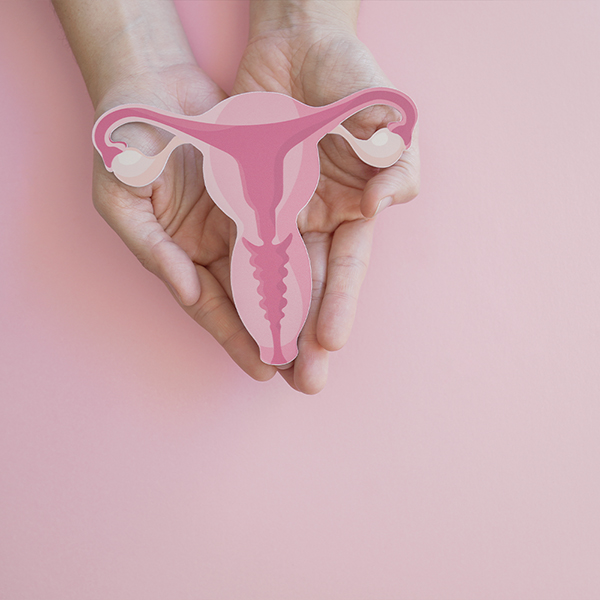
- Ovulation – The follicle ruptures and releases an egg, which travels through the fallopian tube towards the uterus.
- Luteal phase – After ovulation, the ruptured follicle transforms into the corpus luteum, which produces progesterone and estrogen. If fertilization occurs, the egg implants in the uterus and pregnancy ensues. If not, the cycle ends with menstruation.
How to recognize ovulation?
Some women can physically perceive ovulation, which helps them identify their fertile days.
- Lower abdominal pain – Mild to moderate pain on one side of the lower abdomen, known as mittelschmerz, which can last from a few minutes to several hours.
- Changes in cervical mucus – During ovulation, the mucus is clear, slippery, and elastic, similar to egg white, which aids sperm movement towards the egg.
- Increase in basal body temperature – After ovulation, the resting body temperature increases by 0.2–0.5 °C. Regularly measuring temperature every morning can help track ovulation.
- Higher libido – Many women notice an increased sexual desire during ovulation, which is a natural bodily response to increase the chances of conception.
- Breast tenderness – Hormonal fluctuations can cause increased tenderness or tension in the breasts.
Cycle tracking
To accurately track ovulation and fertile days, you can use ovulation calculators or test kits that detect luteinizing hormone (LH) levels. However, ovulation calculators provide only an approximate estimate, based on average cycle length and mathematical calculations.
In reality, ovulation can shift due to stress, lifestyle changes, or health conditions. Therefore, these tools should be used as a guide rather than a precise method.
Understanding your cycle will help you make informed decisions about your reproductive health and overall well-being.